What should I tell you when I call?
Tell us where the property is, how the water entered if you know, which rooms are affected and whether there’s still standing water.
Home / Services
Call DryDocs for emergency water damage response availability. We provide water extraction, moisture checks and structural drying after leaks and floods.
Flooded basement, burst pipe, or appliance leak? Call for emergency water damage response and current availability. We extract standing water, check how far moisture has traveled, and track structural drying with moisture readings.
Tell us where the property is, how the water entered if you know, which rooms are affected and whether there’s still standing water.
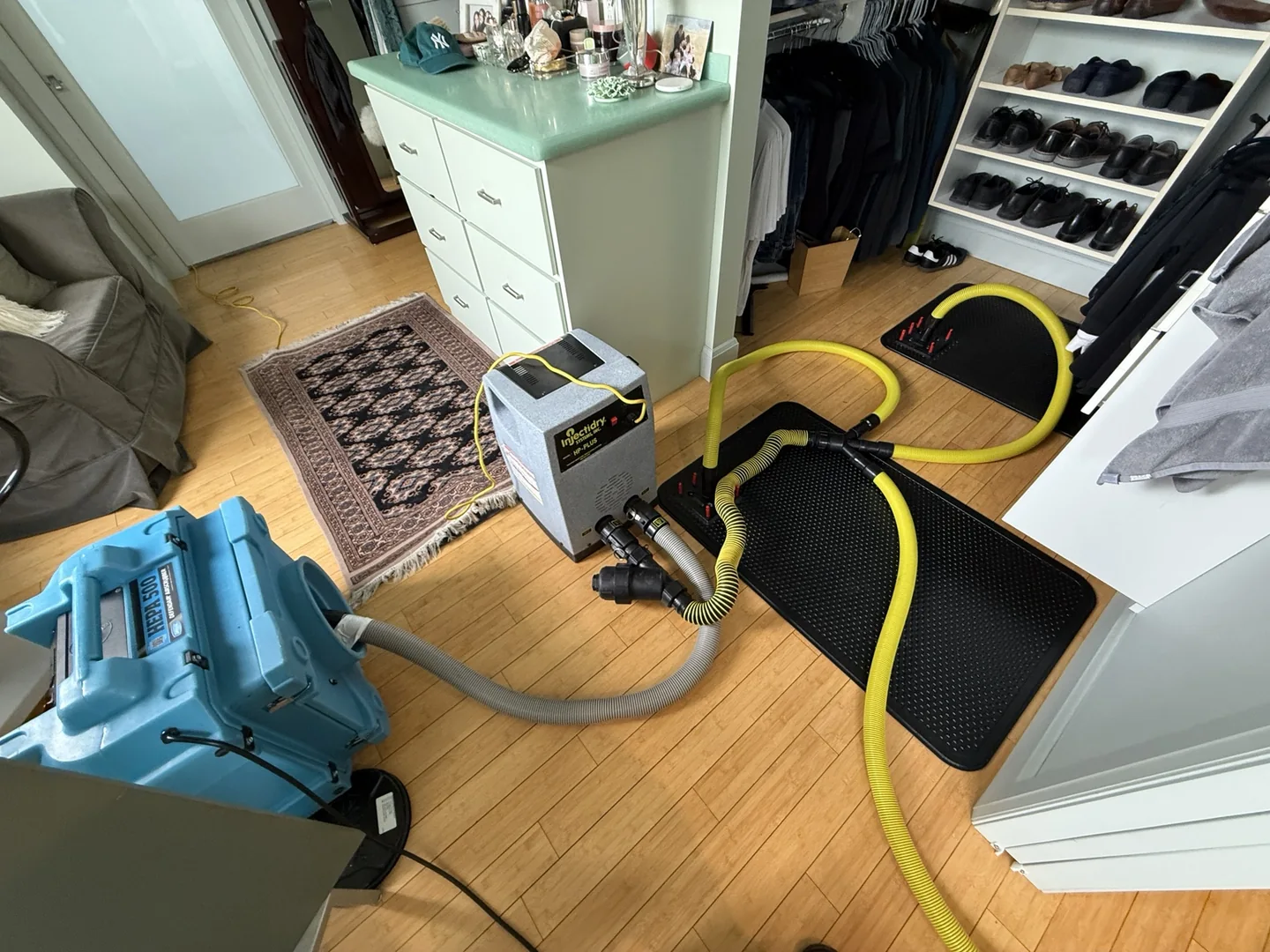
We check affected materials, set up drying equipment appropriate for the conditions and monitor progress with moisture readings.
Water damage from frozen pipes is a common issue during the winter months, leading to extensive and costly repairs. At DryDocs, we specialize in flood cleanup and restoration services to help you deal with such emergencies. Understanding how to prevent frozen pipes can save you from significant water damage and ensure your home stays safe and dry.
When temperatures drop, the water inside your pipes can freeze and expand, causing the pipes to burst. This can result in severe water damage, requiring flood cleanup and restoration. Quick action is essential to mitigate the damage and prevent long-term issues such as mold growth and structural damage.
Preventing frozen pipes and the resulting water damage is crucial for maintaining a safe and dry home during the winter months. By taking proactive steps like insulating pipes, sealing gaps, and maintaining a steady temperature, you can avoid costly repairs and the need for extensive flood cleanup and restoration. If you do experience water damage from frozen pipes, don’t hesitate to contact DryDocs at 605-431-4404 for professional assistance.
DryDocs offers expert water damage restoration, flood cleanup, and mold remediation services in the Black Hills of South Dakota and surrounding areas. Let us help you keep your home safe and dry this winter.
Nobody is truly prepared for disaster to strike, but when it does, the most important thing is to have the right people there to help. DryDocs is available 24/7 for emergency or disaster response. Flood cleanup and mold remediation are our specialties.
DryDocs is your emergency response team! Time is absolutely critical to you and us. We will arrive at your location as soon as possible, day, night, snow, rain, or shine. We understand how important it is to get to work immediately.
DryDocs provides an emergency response service to help reduce or prevent secondary damages. Water damage left untreated can cause issues such as wood rot, mold and microbial growth, pathogenic contamination, and indoor air pollution. Our goal is to mitigate/minimize further damage and extract with the least invasive approach available.
When disaster does strike, call the experts at DryDocs anytime. We are here 24 hours a day, 7 days a week! We will be there to help! Faster to disaster means faster to dry!
For you as a homeowner, the most important tool is knowledge. Know what to do first. Be safe, and be smart. When a flood happens in your home, you need to know what steps to follow, and how to handle it.
Above all, be safe! Water in your home can create dangerous situations! Here are just a few potential safety hazards:
Now that you have identified safety concerns, it is important to identify where water is coming from. Correcting the leak or stopping the intrusion of water is important. If flooding or leaks come back, you can have serious problems in the future.
Fast response time is critical to prevent secondary damages. Water damage doesn’t wait until a more convenient time. We start flood cleanup as soon as possible.
The first step when your house floods is to determine where the water is coming from. This can be difficult. Call DryDocs to help you figure out whose help you need.
What does it mean to be an expert? Here at DryDocs, we have the knowledge and resources not only to handle your disaster, but to remediate the affected materials as efficiently and painlessly as possible. Our goal is to make your home healthy again, and to keep your wallet healthy as well. We are trained with the latest techniques and equipment, and certified by the IICRC for Water Damage Restoration and Mold Remediation. This cutting edge technology enables us to “dry before we pry”. We approach every project wanting to preserve as much material and content as we can. Removing your drywall, your brand new carpeting, or your gorgeous hardwood floors is always a last resort.
We use high-volume air movers and industrial dehumidifiers to evaporate and remove water at lightning speed. These are effective methods, but some drying projects can be incredibly complex, and require innovative solutions to achieve your drying goals while preserving the materials in your home.
DryDocs will work with your insurance company, eliminating the concerns of weaving through coverage and payments. We can bill your insurance directly, while providing them with all the information they need for your claim. We document and monitor drying conditions at every step of the process.
When we arrive, we use non-invasive moisture meters and thermal imaging cameras to determine the perimeter of the flooding. We have the ability to accurately and thoroughly measure and document moisture content of difficult to access areas. We collect all the information your insurance company needs.
While we are drying, we monitor the environment with thermo-hygrometers, moisture meters, and infrared thermometers. This allows us to measure relative humidity, air temperature, surface temperature of materials, moisture content, and evaporation potential. Our high level of science and technology allows us to perform our drying projects with the highest amount of precision. This leads to the most efficient drying time.
Tell us what you’ve noticed, where the property is, and which areas are affected. We’ll talk through the next step and discuss an estimate.
If water intrusion or another situation is time-sensitive, calling is the fastest way to reach us.